


Enabled the delivery of 100+ clinical decision trees to help emergency physicians at point-of-care
How I designed a mobile-first point-of-care clinical decision engine and two-phase visual CMS for Zenxmed, helping emergency physicians make fast, evidence-based diagnostic decisions.
The Strategic Problem
Clinical Information Overload at Point of Care
Emergency medicine is characterized by cognitive intensity and severe time constraints. Practicing physicians are inundated with rapidly evolving clinical guidelines, yet existing medical references are formatted as dense textbooks or static PDFs unsuitable for bedside triage.
Zenxmed was founded by emergency physicians to solve a fundamental clinical bottleneck:
- Clinicians need diagnostic clarity in seconds at the bedside, not academic treatises.
- Traditional medical publishing takes months or years to update recommendations, creating dangerous lags in adopting clinical best practices.
- Clinical references lacked interactive mechanisms for practicing doctors to debate nuances or annotate real-world exceptions.
The objective was to create an open-access, mobile-first clinical platform that synthesized complex diagnostic pathways into immediate, actionable decision flows.
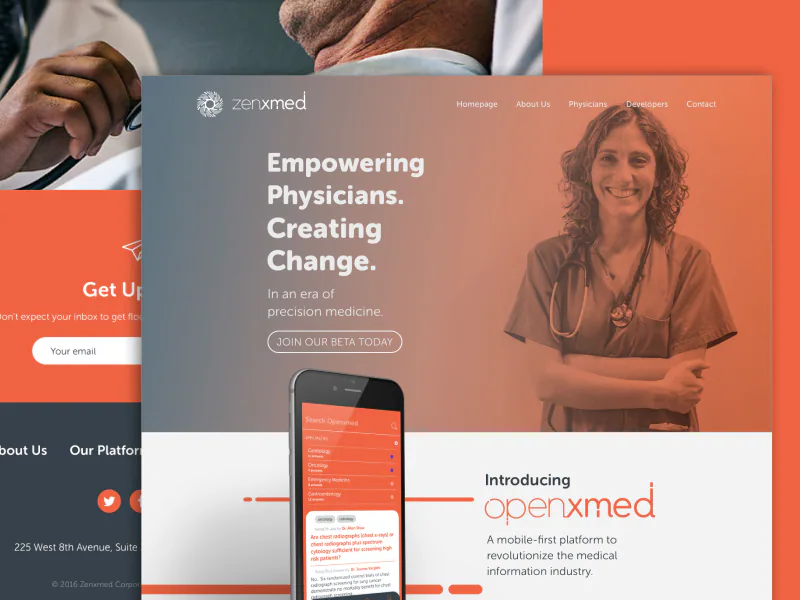
Discovery & Clinical Hypothesis Testing
I directed a rigorous discovery process tailored to time-poor healthcare professionals:
- Interviewed 24 emergency and family practice physicians to map point-of-care decision workflows, cognitive friction, and environmental constraints.
- Surveyed 800+ medical students, residents, and attending physicians to test hypotheses around diagnostic confidence and peer governance.
Hypothesis 1 — Diagnostic Confidence: Structuring complex clinical guidelines into step-by-step branching decision trees increases physician diagnostic speed and reduces reliance on clinical assumptions. Hypothesis 2 — Peer Governance: Replacing solitary textbook authorship with an open contributor-review model fosters active clinical engagement, transparency, and rapid guideline iteration.

Product Architecture
Point-of-Care Mobile Experience
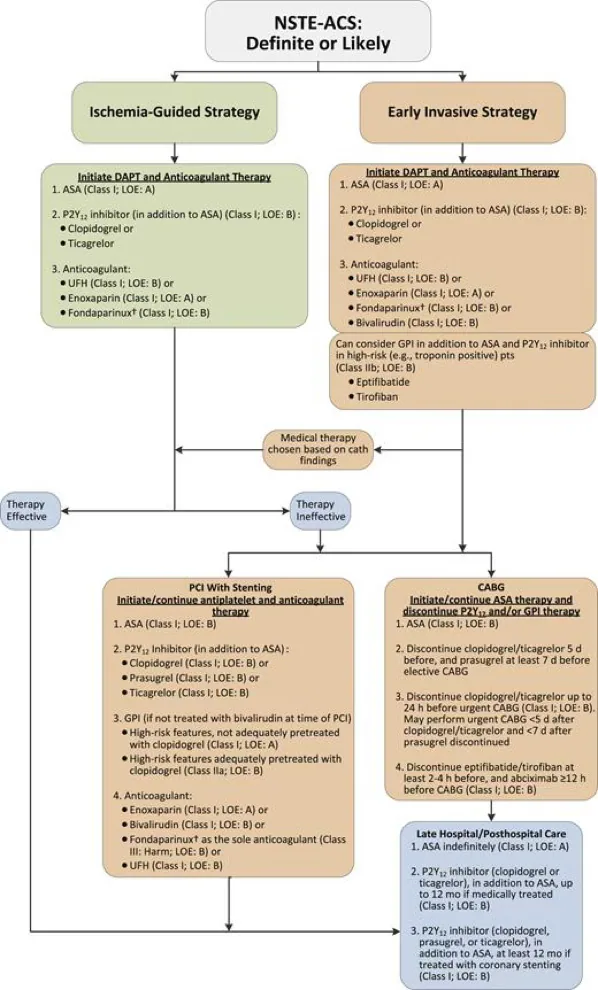
Diagnostic Decision-Tree Navigation
I translated dense medical algorithms into an intuitive, branch-by-branch mobile decision interface:
- Surfaced immediate binary triage decisions at the top level while providing expandable citations, dosage calculations, and evidence summaries on demand.
- Optimized touch geometry, one-handed navigation, and dark mode contrast for sterile, low-light clinical environments.
Clinical Trust & Community Annotation
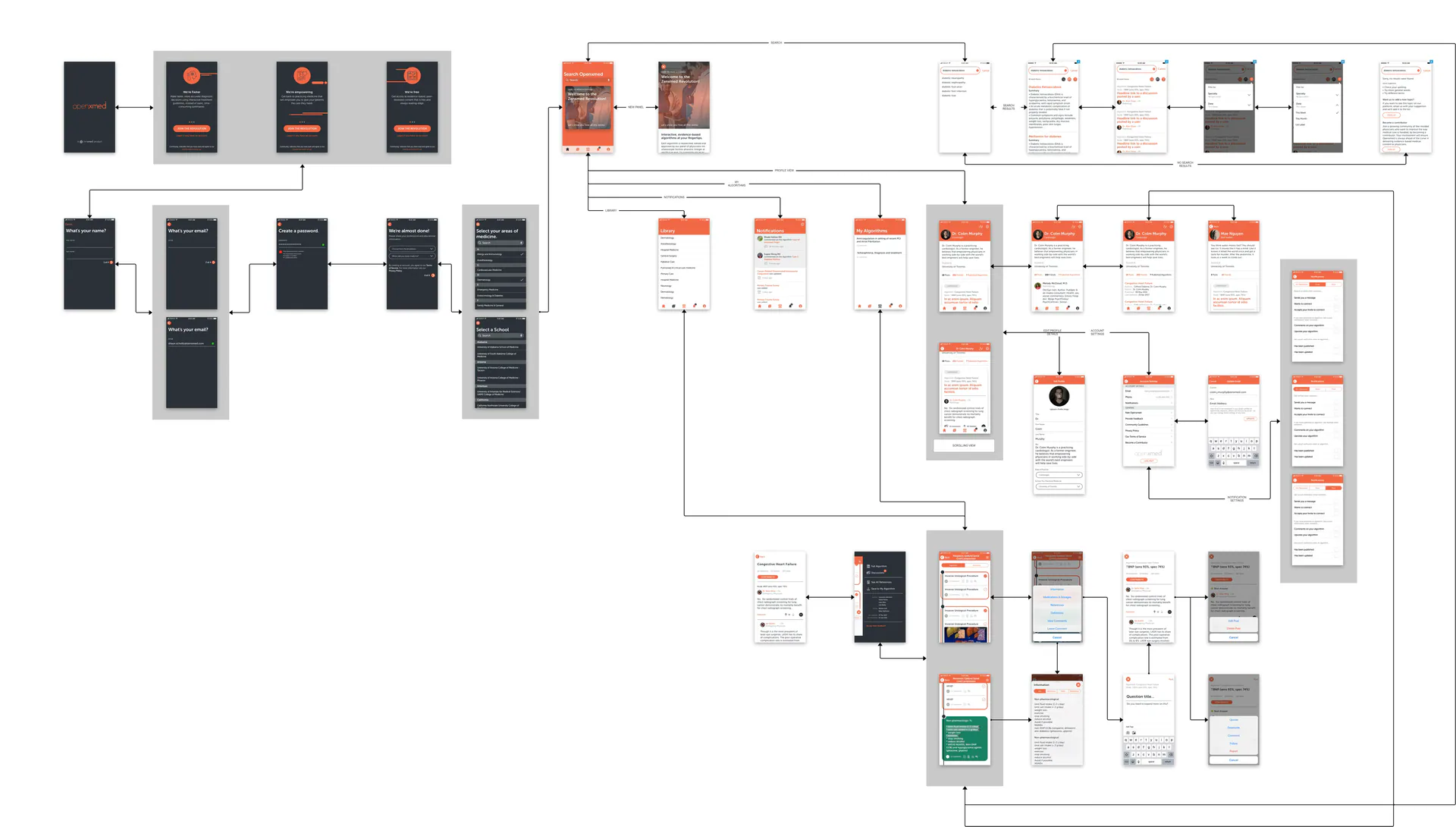
- Designed credentialed physician profiles highlighting medical specialty, institutional affiliation, and board status to establish trust.
- Enabled clinicians and medical students to annotate decision nodes with case observations and updated research, creating a living medical feedback loop.
Scalable Two-Phase Clinical CMS Architecture
To support a rapidly expanding library of medical algorithms, I architected a pragmatic, phased content pipeline:
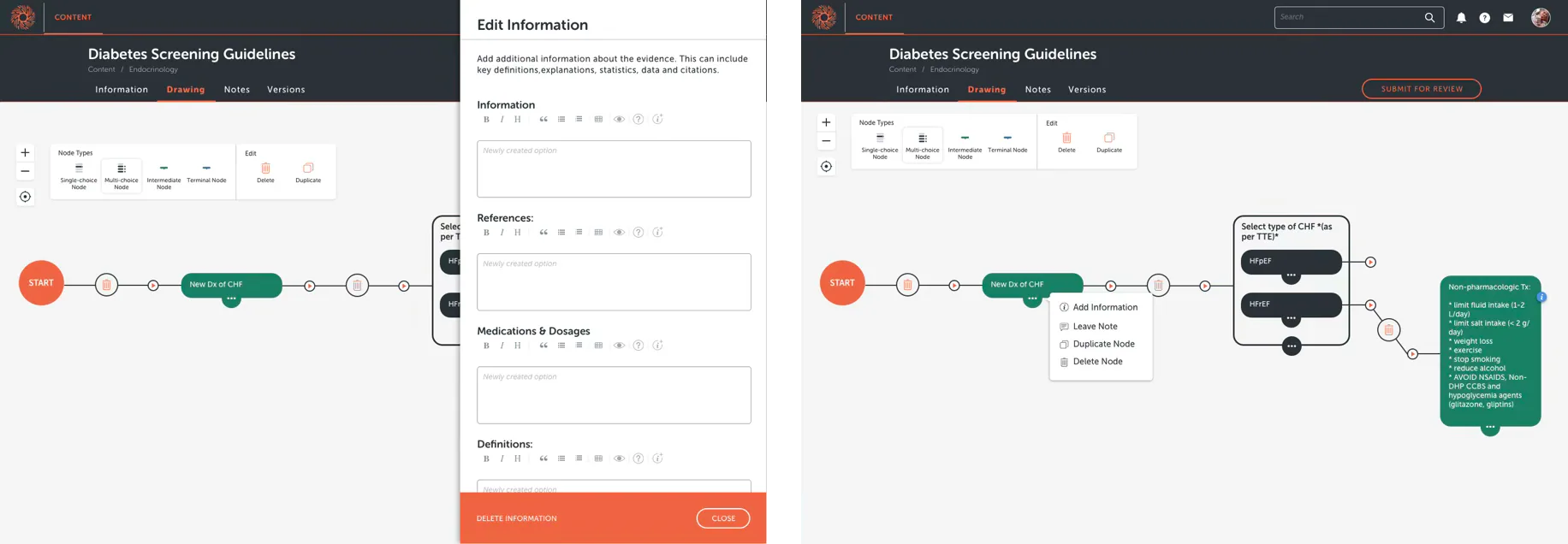
- Established standardized schema templates using Draw.io to author and validate the first 100 clinical algorithms in 6 months while engineering built the software infrastructure.
- Designed a dedicated web-based authoring system featuring a drag-and-drop visual algorithm builder, structured peer-review queues, version management, and one-click publishing to the mobile client.
Strategic Outcomes & Clinical Validation
- The decision-tree UI reduced the time required for emergency physicians to locate and execute acute clinical pathways.
- The two-phase CMS enabled the medical team to author and deploy over 100 comprehensive clinical decision pathways in under six months.
- Validated the contributor model, fostering active peer-to-peer discourse between attending physicians, residents, and medical students.
Key Takeaways & Executive Reflection
- Launching with a lightweight, schema-driven process proved clinical demand and refined data structures before writing expensive custom CMS code.
- Designing for specialized disciplines requires rapidly mastering clinical taxonomy and respecting the real-world cognitive pressures of practitioners.