


Redesigns a tele-health platform that helped secure $2M in seed funding and a 300% growth trajectory
How I led the end-to-end UX redesign of Wellin5’s telehealth platform, replacing clunky PDF/email workflows with streamlined intake and booking to help secure $2M in seed funding.
The Strategic Context
Prior to the massive telehealth acceleration of 2020, accessing licensed counseling online was burdened by severe friction. Wellin5 set out with a clear mission: enable clients to access quality therapy anytime, anywhere.
However, the legacy product experienced critical drop-off points across the care journey:
- Clinical intake relied heavily on static email forms and PDF questionnaires, creating substantial cognitive fatigue for clients seeking urgent help.
- Multi-step booking lacked real-time availability visibility, causing appointment abandonment.
- Fragmented communication between sessions reduced therapeutic momentum and increased no-show rates.
The goal was to transform an administrative hurdle into a warm, seamless, and clinically sound digital experience.
Discovery & Journey Architecture
I led a structured discovery process combining qualitative user interviews (with both clients and licensed therapists), behavioral funnel analytics, and competitive health-tech benchmarking.
Key Discovery Insights
- Patients seeking mental health support experience heightened anxiety during onboarding, and long clinical forms trigger immediate abandonment.
- Counselors needed core triage data up front to establish fit, but secondary clinical depth was best captured progressively or during live sessions.
- Therapeutic rapport depends heavily on the predictability and responsiveness of client-counselor touchpoints between formal sessions.
Interaction Design & Product Architecture
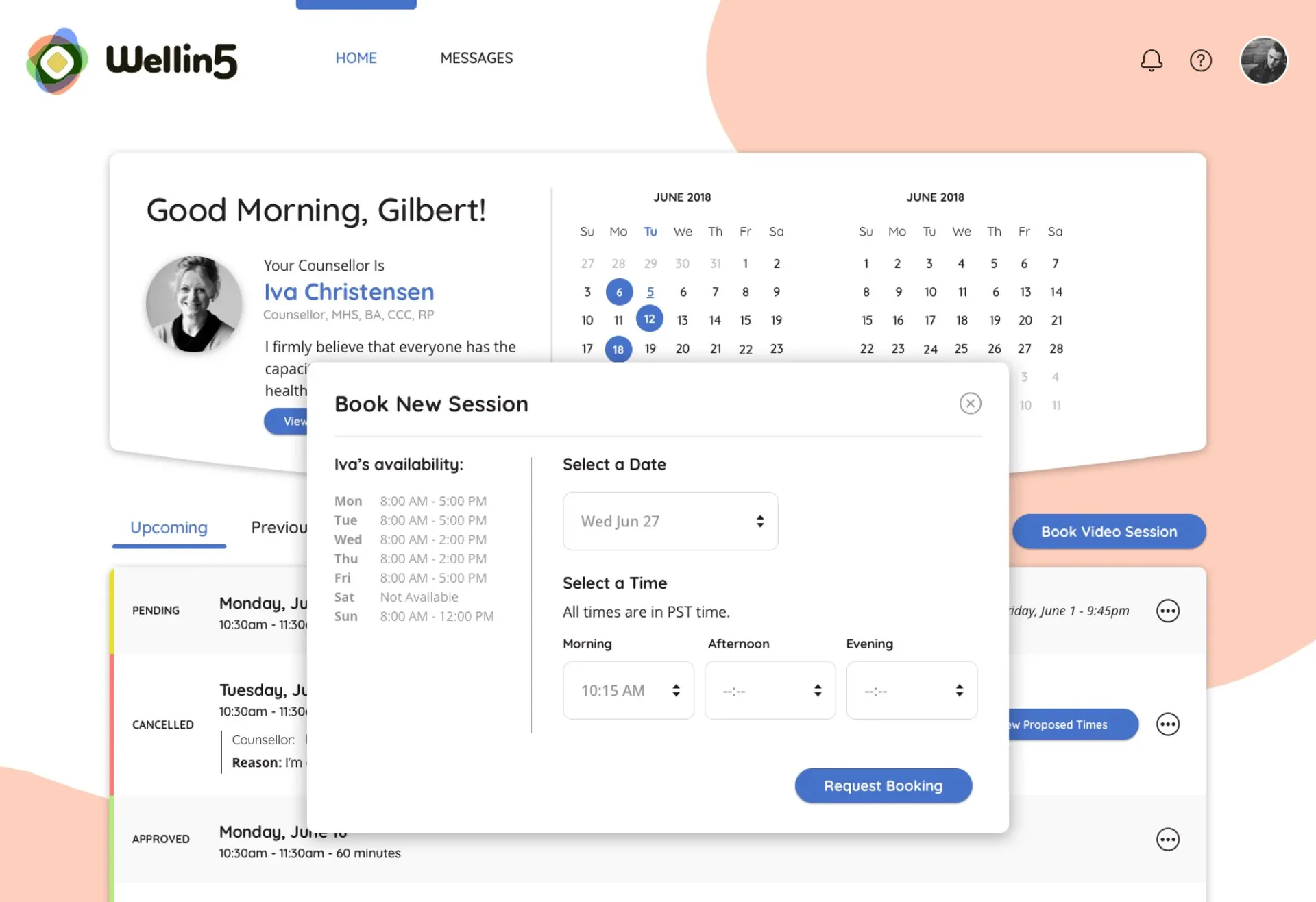
Streamlining Scheduling & Matching
I redesigned the core booking flow into an intuitive, real-time matching experience:
- Integrated therapist availability with immediate timezone translation.
- Designed transparent matching parameters (specialties, clinical approaches, gender preferences) so clients felt in control of their care match.
- Built low- and high-fidelity prototypes, running iterative usability tests before handing off validated modules for parallel engineering delivery.
Adaptive Clinical Intake
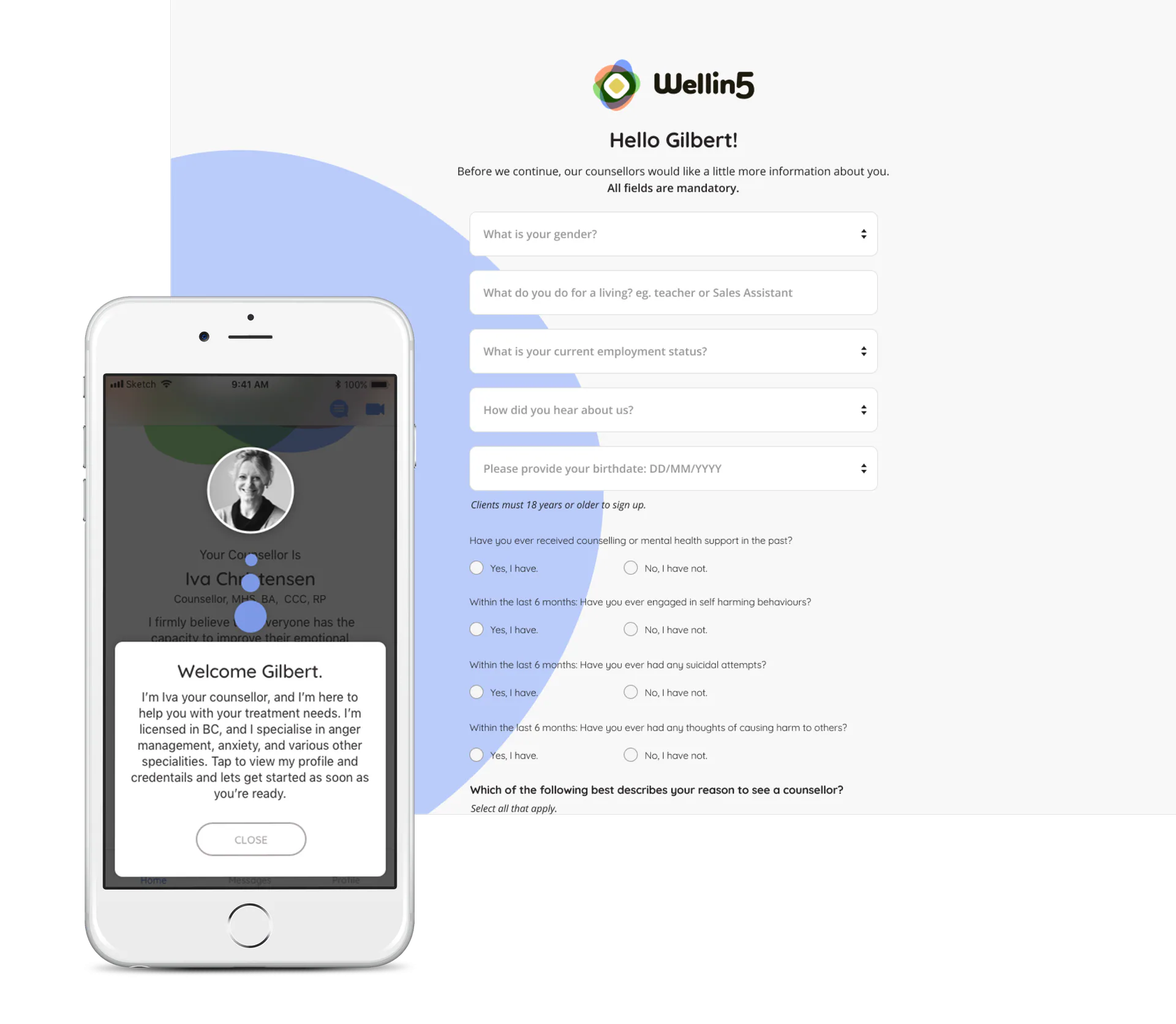
To eliminate the PDF bottleneck, I decomposed the clinical intake questionnaire into an adaptive, conversational flow:
- Separated essential triage requirements from discretionary medical background to keep intake focused.
- Added clear visual progress indicators to reduce perceived effort.
- Built clinical context handoffs so matched therapists received structured client notes prior to the first session.
Asynchronous Client–Therapist Messaging
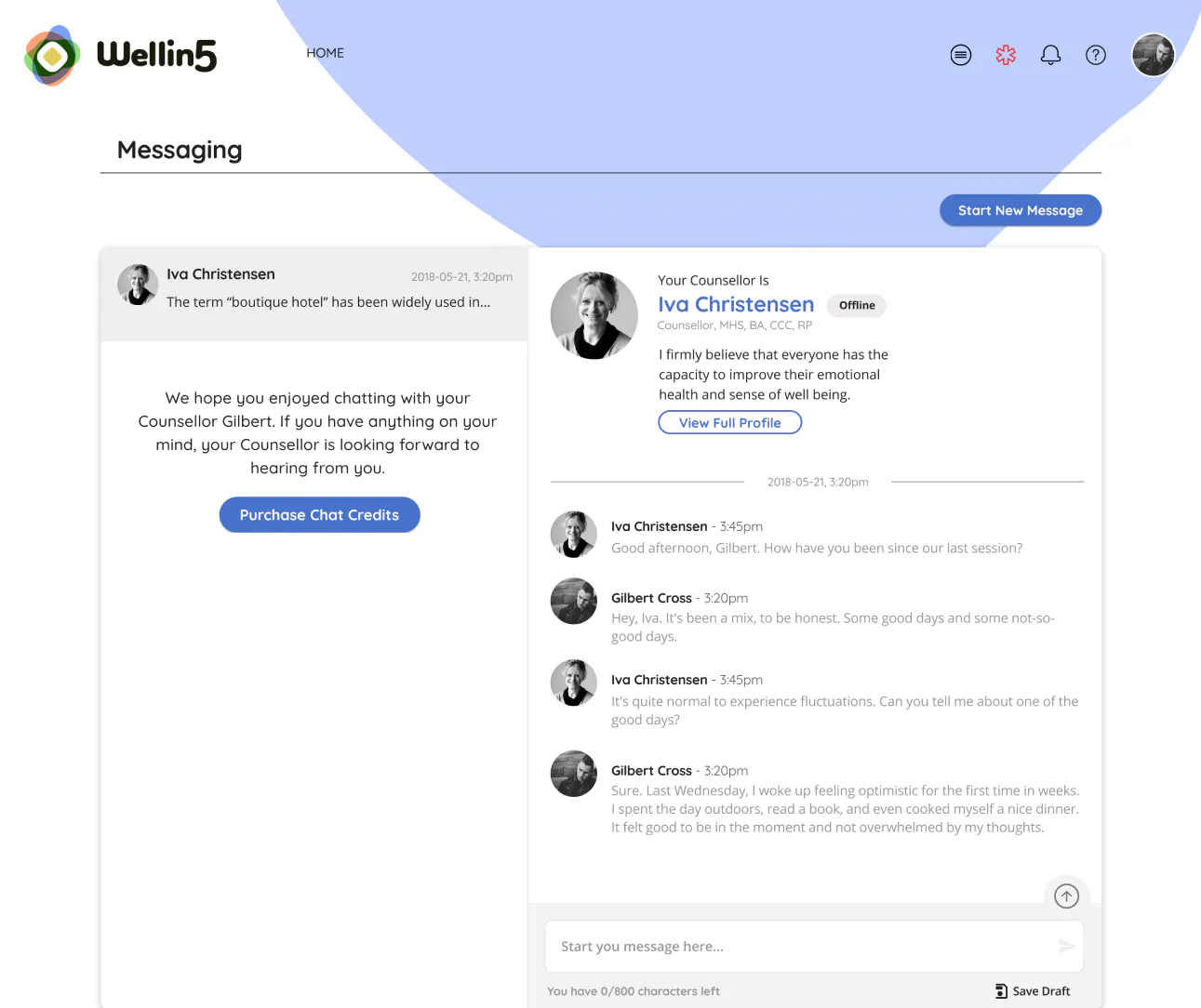
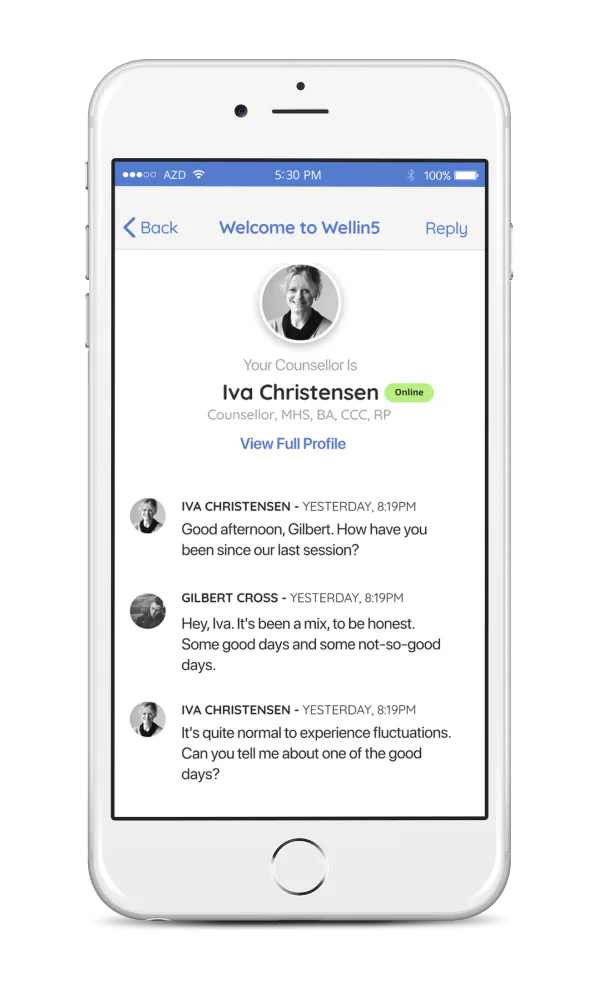
Recognizing that therapy extends beyond 50-minute calls, I expanded platform messaging capabilities:
- Provided read receipts and delivery states for reassurance to clients reaching out during moments of distress.
- Enabled scheduled messages and automated reminders for counselors to manage boundaries and session preparation prompts.
- Delivered seamless continuity across mobile and desktop interfaces.
Measurable Outcomes & Business Impact
- Played a direct role in Wellin5 securing $2M in seed funding, setting up 300% year-over-year operational growth.
- Automated preparation workflows and real-time reminders materially reduced no-show rates.
- Replacing email/PDF workflows with digital intake reduced client onboarding duration and improved therapist matching accuracy.
- Aligned visual tone, micro-copy, and product ergonomics to foster safety, empathy, and professional trust.
Key Takeaways & Executive Reflection
- In healthcare and mental wellness products, UX friction is not merely an inconvenience—it actively deters vulnerable users from receiving care.
- Balancing clinical data requirements with user cognitive load requires aggressive prioritization of essential vs. deferred questions.