

Designing Clarity Into Keyword Chaos
How user insights shaped Dtermin, an SEO tool that simplifies lead generation for small businesses, from ideation and brand identity through UX refinement.
Delve into the evolution of Dtermin, a tool born to simplify online lead generation for small businesses. Witness firsthand how user insights shaped its transformative journey, from initial ideation to design refinement, and how a synergy of brand identity and user experience illuminated the path to meet real-world needs.
The Problem
Navigating the complex world of online lead generation can be daunting, especially for small business owners bombarded with various conflicting tools and advice. Dtermin emerged as a beacon of clarity, a tool engineered to uncomplicate the laborious task of keyword sorting. This case study explores how we pivoted from traditional paradigms to deliver an intuitive SEO tool that gives businesses actionable insights.
Small business owners understand the importance of online lead generation, but they often struggle with the overwhelming amount of conflicting tools, advice, and content available. This makes the learning curve difficult to overcome.
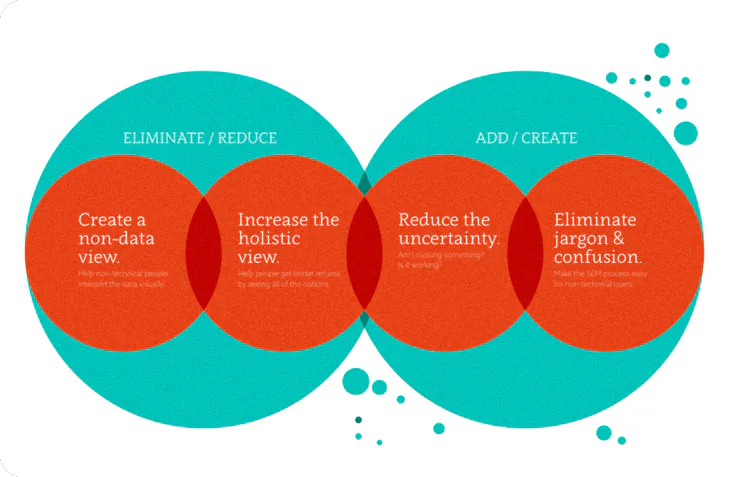
Dtermin was created to simplify the task of sorting through thousands of keywords for a website, product, or service. Its purpose is to provide a list of terms for businesses to target and act on, giving them insights into what their customers are searching for and the search queries they use.
My Involvement and Role
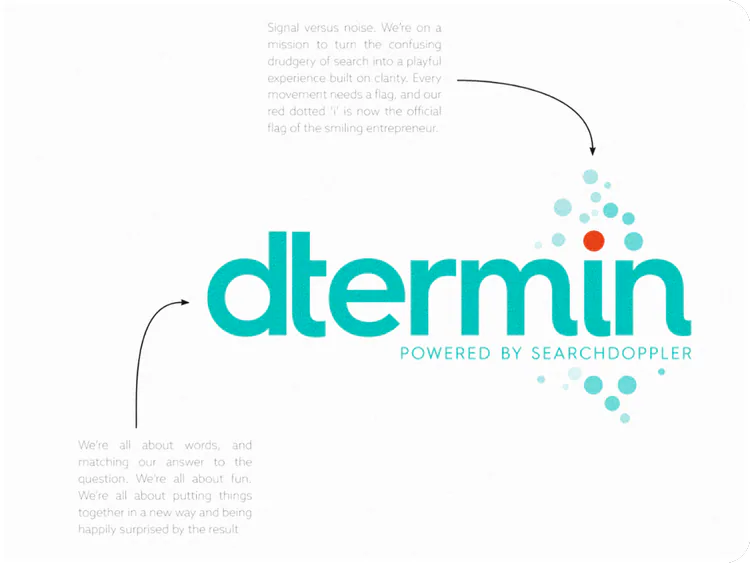
The Dtermin project was a designer's playground—an opportunity to work with a stellar team and mould a nascent idea into a fully realized product. As the driving force behind the brand identity, I orchestrated stakeholder workshops, created a cohesive identity system, and later steered the UI/UX development with an adept team of designers and strategists.
Working on this project was incredibly enjoyable, as I had the opportunity to collaborate with amazing individuals. My role was to define the brand and guide it through stakeholder workshops to create a working identity system. Additionally, I was responsible for developing the user interface (UI) and user experience (UX) with a small team of designers and strategists.
A Truly User-Centered Design (UCD) Process
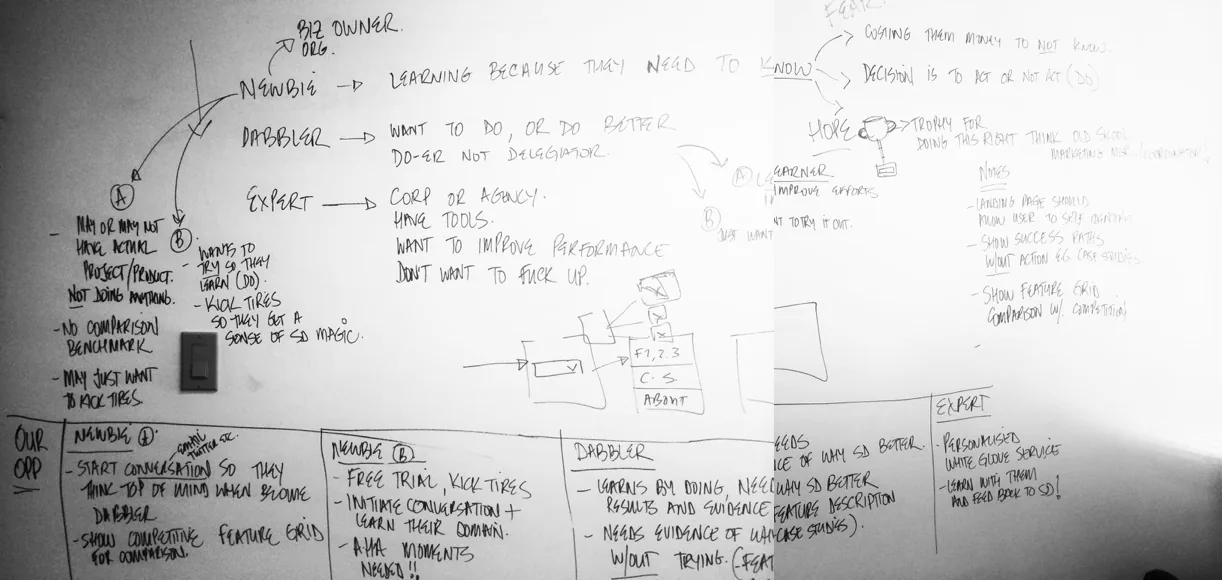
Understanding how small business owners would use the tool was crucial. Through user research and interviews with small business owners within the parent company, we gained valuable insights and context to design effective solutions.
Through multiple whiteboard sessions and rapid prototyping, we developed a framework that focused on guiding users through four stages to achieve their goals:
- Effective onboarding to demystify lead generation.
- Building a list of keywords based on their product or service.
- Targeting the most relevant keywords from the list.
- Executing the targeted list and generating targeted traffic.
Evaluation
To assess the effectiveness of the design, we employed a combination of qualitative and quantitative methodologies, including remote usability testing, static UI click tests, and visitor recordings. We discovered that our users didn't necessarily want a "simple" solution. In fact, our hypothesis was proven wrong; users were not overwhelmed by the amount of information or results we provided. They perceived our system as more robust and accurate when presented with more results, rather than a refined return.
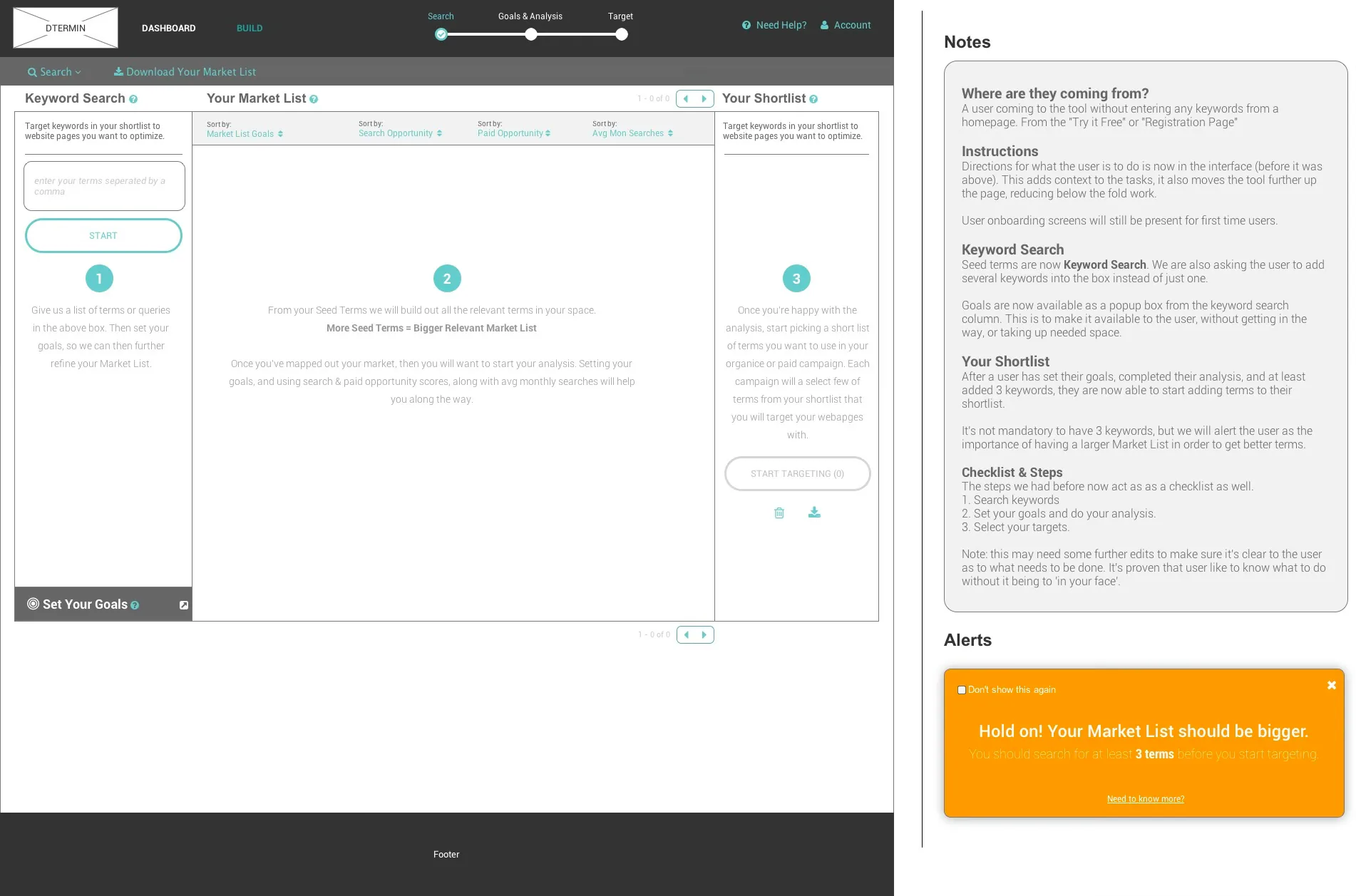
Therefore, the challenge was to combine the first three stages into one screen to meet their expectations.
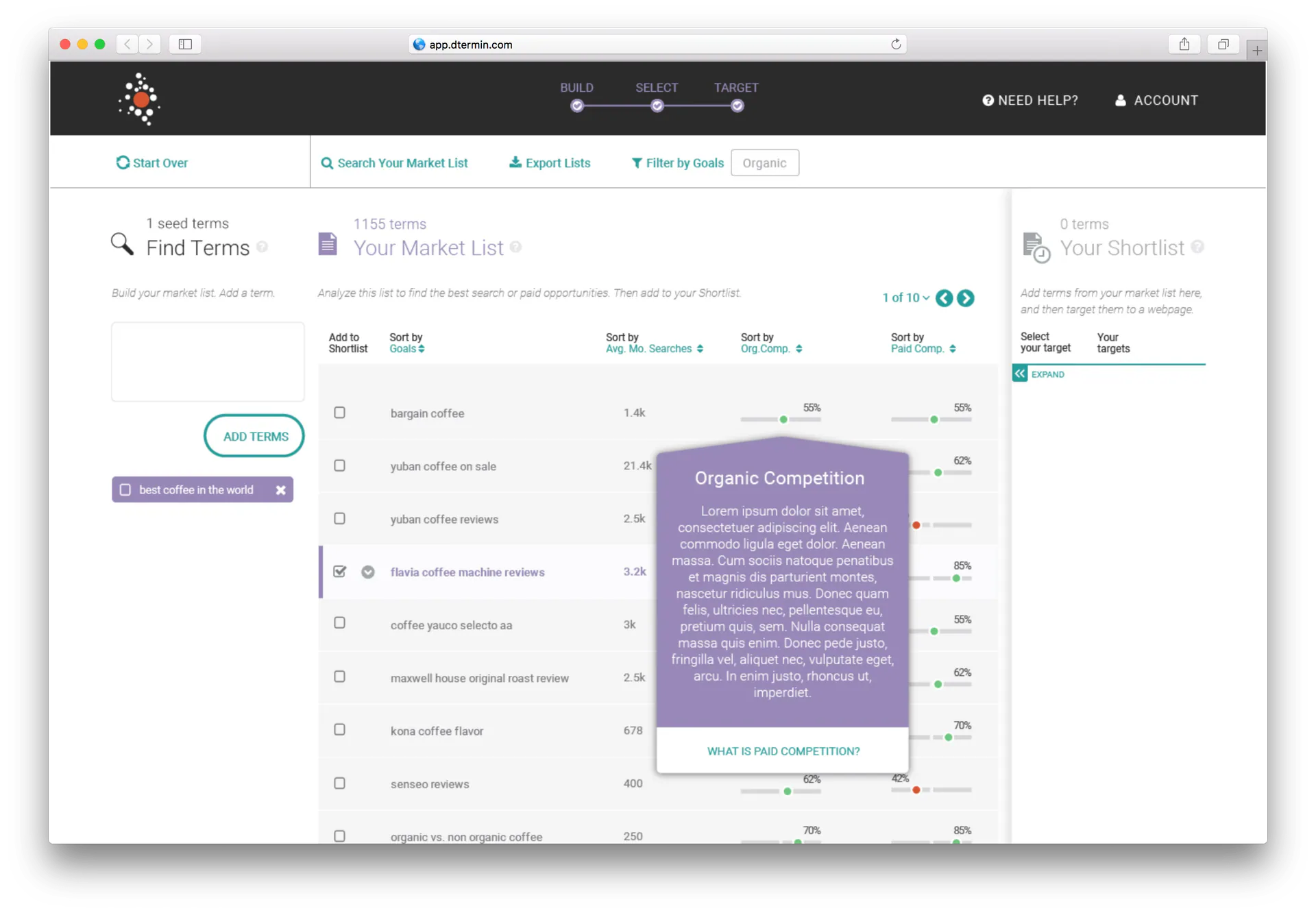
Data Visualization and Workflow
We explored the concept of visualizing the results in an interactive bubble chart, which was enjoyable but not practical for execution. We ultimately decided to shelve the idea once we refined our flow.
Another important finding was that our users wanted guidance on how to utilize the terms they obtained.
Final Insights: Users Crave Direction
One consistent piece of feedback was the user’s desire for guidance post-list creation. They didn't just want a list of keywords; they wanted to know what steps to take next. This became an essential component of our final design, as we looked to provide actionable recommendations alongside the keyword data.
